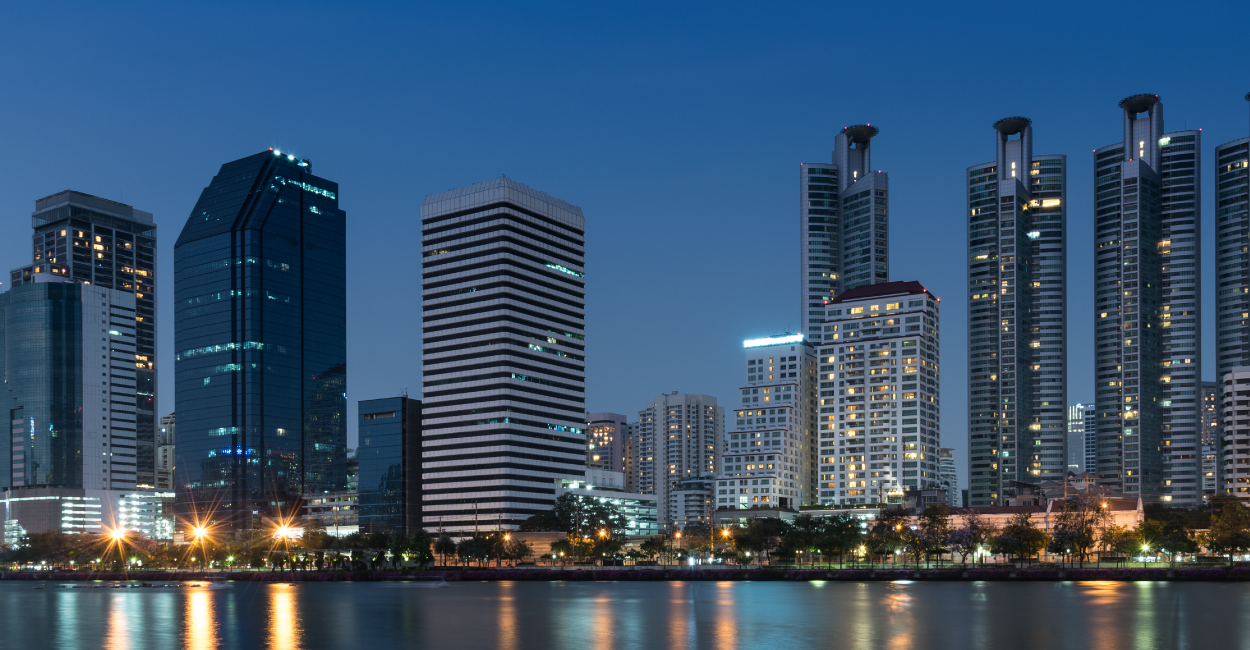
Hyderabad’s revised Transferable Development Rights (TDR) framework, introduced through G.O. Ms. No. 16 (January 2026) and further rationalized through G.O. Ms. No. 95 (March 2026), marks a decisive shift in the city’s real estate development. Moving beyond traditional regulatory controls, the policy establishes a market-driven mechanism that aligns environmental restoration, infrastructure augmentation, and real estate growth through a tradable development rights ecosystem.
By transforming restricted and non-developable land into transferable development rights, the policy unlocks latent land value and creates a market-based mechanism for value creation and realization within the urban ecosystem. The policy is designed to support environmental restoration, infrastructure creation, and high-rise development through a market-driven development rights mechanism.
Salient Features of Hyderabad TDR Policy 2026
- The policy enables voluntary surrender of lands falling within notified FTL, MFL, and buffer zones in exchange for Transferable Development Rights (TDR), eliminating the need for direct monetary compensation.
- A differentiated compensation structure has been introduced, providing TDR equivalent to 200% of surrendered built-up area for FTL/MFL lands, 300% for buffer zone lands, and 400% for lands surrendered for public infrastructure and conservation projects.
- The framework establishes a market-driven TDR ecosystem by creating supply through land surrender and demand through mandatory utilization in high-rise developments.
- High-rise developments are required to utilize TDR, with 3% applicable on built-up area above the 10th floor and 5% on built-up area above the 20th floor.
- Permits additional floors through TDR utilization, linked to road width and plot characteristics.
- Allows setback relaxations through TDR utilization, subject to prescribed regulatory and planning norms.
- Enables both on-site and off-site utilization of TDR, improving planning flexibility.
- A phased TDR submission mechanism has been introduced, requiring partial submission at the building approval stage and the balance prior to issuance of Occupancy Certificate.
- A dedicated TDR Bank mechanism has been established to address ownership disputes and safeguard development rights.
- The policy is applicable across the Core Urban Region (CURE), significantly expanding the geographical applicability and transferability of TDR.
Development Impact: Enabling Vertical Growth and Infrastructure-Led Urbanization
- The framework is expected to accelerate lake restoration, river conservation, nala widening, and other public infrastructure initiatives without imposing significant fiscal burden on the government.
- By incentivizing higher-density development, the policy promotes vertical urbanization and more efficient utilization of land and infrastructure within Hyderabad Metropolitan Region.
- The framework incentivizes high-rise development over horizontal expansion, particularly across key growth corridors such as the Western Corridor, Neopolis, Financial District, Kokapet, and the ORR influence zone.
- Increased development intensity is expected to improve the utilization of transportation networks, utilities, and social infrastructure while enhancing overall land-use efficiency.
- Over time, it is expected to drive a more compact, organized, and globally competitive urban skyline.
Stakeholder Impact & Investment Considerations
- The TDR policy unlocks value for developers, landowners, and investors while introducing new regulatory and market complexities.
- For developers, it improves project feasibility through higher saleable area, design flexibility, and additional development potential, albeit with greater approval and compliance requirements.
- For landowners, it transforms restricted and non-developable land into a tradable asset, creating new avenues for value realization.
- For investors, it creates opportunities in TDR aggregation, trading, and structured land transactions, subject to market liquidity and regulatory clarity.
- Greater emphasis must be placed on title due diligence, approval risks, TDR ownership structures, sharing mechanisms, and monetization strategies, as these factors directly impact project viability and value realization.
- Land acquisition and JD evaluations must now incorporate TDR yield, development potential, infrastructure readiness, regulatory approvals, and micro-market absorption.
- Financial feasibility assessments should account for the valuation, utilization, and monetization potential of development rights alongside traditional land and construction costs.
Conclusion: The Way Forward
- Hyderabad’s New TDR policy 2026 marks a pivotal turning point in the evolution of its real estate market. By transforming development rights into a tradable and functional asset, the policy has the potential to unlock land value, accelerate infrastructure delivery, and promote sustainable urban growth.
- However, its long-term success will depend on the development of a transparent and liquid TDR market, consistent regulatory enforcement, and the ability of stakeholders to adapt to its complexities with informed decision-making.
- For developers, landowners, and investors, this is not merely a regulatory change; also, it represents a strategic inflection point that favours those who apply rigorous analysis, execute with discipline, and adopt a long-term, forward-looking perspective on urban development.