7th August 2026
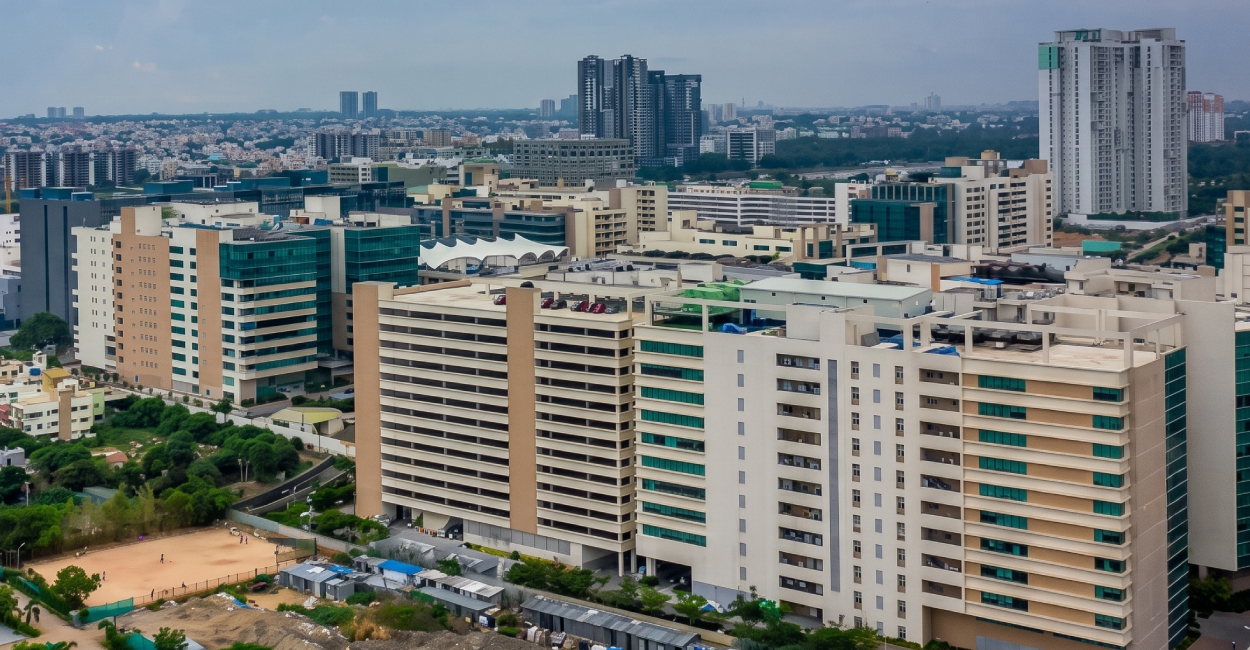
Bengaluru has emerged as one of India's strongest residential markets in H1 2026, demonstrating a rare combination of healthy demand, sustained launch activity, and balanced supply expansion. Unlike markets driven primarily by investor activity or luxury-led demand, Bengaluru's growth continues to be supported by a broad-based end-user ecosystem anchored by technology, GCC expansion, start-up activity, infrastructure investments, and continuous in-migration of skilled professionals.
The city recorded nearly 39,420 residential sales and over 45,000 new unit launches during H1 2026, reflecting strong confidence from both homebuyers and developers. More importantly, demand and supply have expanded at a similar pace, indicating a structurally healthy market rather than a speculative growth cycle.
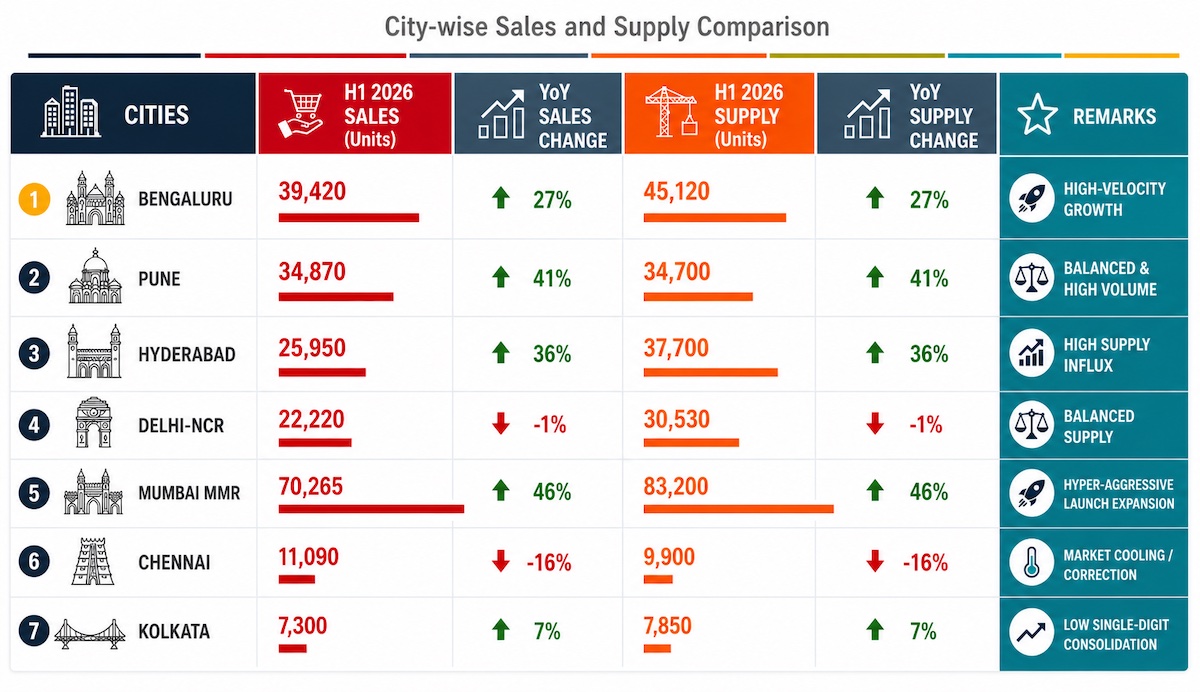
While major markets such as Mumbai MMR, Delhi NCR, Hyderabad and Pune continue to witness strong residential activity, Bengaluru stands apart due to its balanced demand-supply dynamics, technology-led employment growth, expanding infrastructure network, and broad-based end-user demand, making it one of India's most structurally resilient residential markets.
While overall market momentum is expected to remain positive, the next phase of growth is likely to be more selective, with stronger demand concentrated around specific product types, price segments, and infrastructure-led growth corridors.
1. ₹1.5 Cr – ₹3.0 Cr Price Segment: This is expected to remain Bengaluru's most preferred price segment. Demand is driven by dual-income technology professionals, GCC employees, senior corporate executives, and upgrade homebuyers seeking larger and better-quality homes.
2. Large 3 BHK Configurations to Dominate Demand: Demand is expected to remain strongest for large-format 3 BHK homes in the 1,600–2,400 sq.ft. range. Buyers are increasingly prioritising space, functionality, work-from-home requirements, and lifestyle amenities over compact apartment formats.
3. Compact 4 BHK units Gaining Acceptance: The premium housing segment is witnessing increasing demand for compact 4 BHK configurations from affluent professionals, entrepreneurs, and upgrade buyers seeking enhanced living standards without moving into ultra-luxury pricing categories.
4. Integrated Township Developments to Witness Strong Absorption: Projects offering residential, retail, senior housing, healthcare facilities, open spaces, community infrastructure, and lifestyle amenities within a single ecosystem are expected to outperform conventional standalone projects.
5. Branded & Grade A Plotted Developments to Continue Growing: Particularly in peripheral growth corridors connected through STRR, Airport expansion and upcoming infrastructure projects.
6. Emerging Growth Corridors
Building Plan Approval process in Bengaluru Metropolitan Region (BMR)
How well do you know the statutory authorities related to real estate developments in Hyderabad Metro?
Check your understanding regarding Building Plan Approval process in Chennai Metropolitan Area (CMA)
How well do you know the statutory authorities related to real estate developments in Chennai Metropolitan Area (CMA), take this short quiz to find out.
Check your understanding regarding Building Plan Approval process in Hyderabad Metropolitan Region
A lot of architectural and interior design knowledge is required to make informed decisions while designing a co-living workspace. Take this short quiz to find out if you are ready!
Do you know it all that is required to make you successful in co-living industry space? Take this quick short quiz to grade your knowledge of the Co-Living market in India.
Take this short quiz to gauge your understanding the concept of re-purposing!
How well do you know the statutory authorities related to real estate developments in Bengaluru Metropolitan Region? Take this Quiz to find out!