13th April 2026
Market shifts from rapid expansion to stabilization as supply begins to outpace absorption, driving a need for disciplined growth.
The Bengaluru residential real estate market is transitioning from a phase of rapid expansion into a period of measured stabilization. While supply–demand dynamics remain central, the current shift is equally shaped by macroeconomic conditions, capital flows, affordability pressures, and evolving buyer sentiment.
Real estate cycles typically progress through Recovery, Expansion, and Consolidation phases, with their pace and intensity influenced by external factors such as interest rates, income growth, employment trends, and the overall liquidity environment.
Recovery Phase (2020 -2021):
Demand revival was driven by historically low interest rates, policy stimulus, and constrained demand post-COVID. The market remained end-user led, with limited new launches as developers focused on survival and inventory liquidation; sales improve modestly; Sales improved gradually, prices remained stable, and high inventory levels with elevated overhang persisted.
Expansion Phase (2022–2024):
A robust macroeconomic environment, driven by IT sector growth, job creation, rising household incomes, and ample liquidity which drove the demand. Low borrowing costs significantly improved affordability, enabling higher ticket-size purchases and premiumization.
This phase witnessed strong demand from both end-users and investors, a sharp increase in launches, increased sales velocity, rising prices, and improved overhang, with developers actively pursuing growth and expansion.
Stabilization / Early Consolidation Phase (2025–2026):
The market is now influenced by rising interest rates, affordability pressures, and global economic moderation, further impacted by geopolitical tensions such as global trade conflicts and the US–Iran situation. These factors are driving inflationary pressures and uncertainty, leading to demand normalization, longer buyer decision cycles, and more selective investor activity.
As a result, demand growth moderates; supply remains high; Sales are stabilizing; price appreciation has become selective; and inventory levels are beginning to stabilize or rise, leading to a moderate increase in overhang. Buyer sentiment has turned more cautious, prompting developers to shift focus from aggressive expansion to rationalization and disciplined inventory management.
| Attribute | Recovery | Expansion | Consolidation |
|---|---|---|---|
| Demand | Reviving | Strong | Slowing growth |
| Launches | Low | High | Very High |
| Sales | Improving | Strong | Stable / Slower |
| Prices | Stable | Rising | Moderate / Selective correction |
| Inventory | High | Reducing | Stabilizing / Rising |
| Overhang | Very High | Low - Moderate | Moderate - High |
| Buyer Type | End-user | End-user + Investor | Mixed / cautious |
| Developer Strategy | Survival | Growth | Rationalization |
Supply - Demand Dynamics
Between 2020 and 2025, growth was driven by rising supply supported by strong demand momentum. However, recent trends indicate that new launches are beginning to outpace absorption, resulting in increased unsold inventory with the increase in overhang. This marks a transition from expansion-led growth to a more balanced, absorption-driven market cycle.
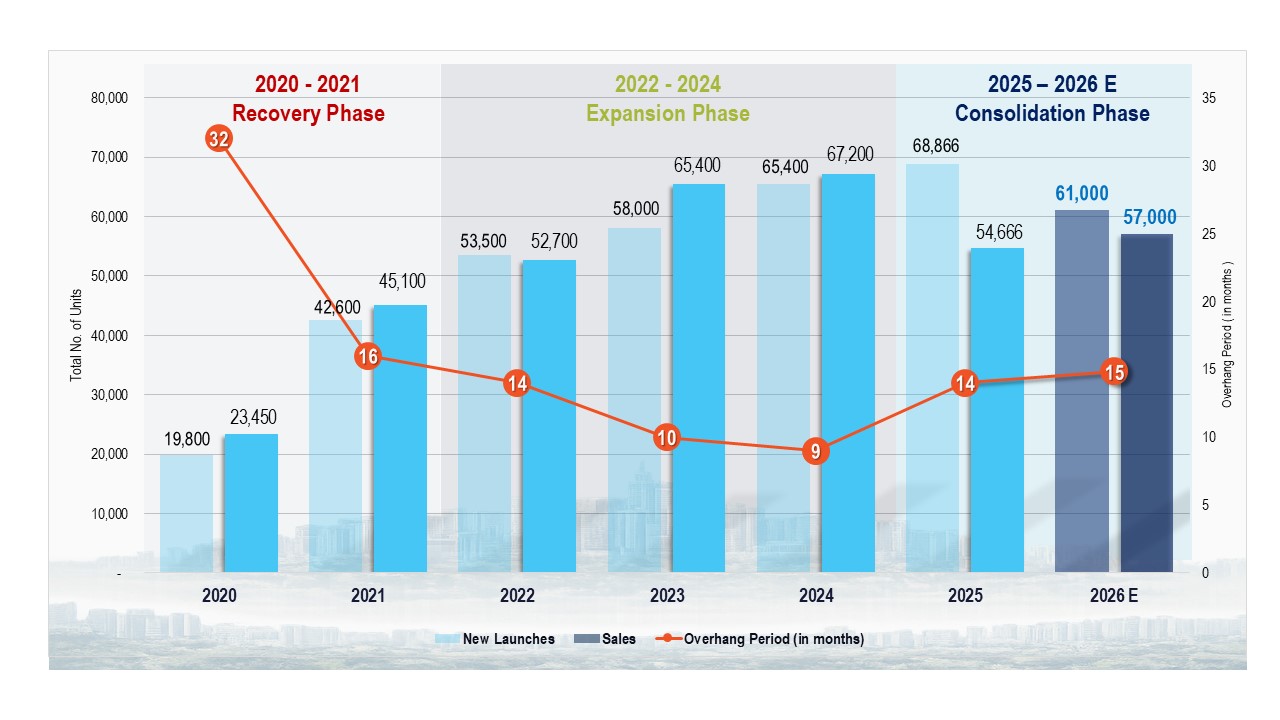
Inventory & Overhang Trends
Outlook and Strategic Implications
The ongoing transition in Bengaluru’s residential market represents a natural progression in the real estate cycle, moving from rapid expansion to a more mature, economically aligned phase of stabilization.
The market has entered a phase of controlled supply, requiring disciplined supply-side strategies to sustain market equilibrium.
This shift reflects a move toward sustainable, absorption-led growth, where disciplined supply and demand alignment will be critical in maintaining long-term market stability and pricing resilience.
In the medium term, this balanced and structurally healthier market environment is expected to lay the foundation for the next cycle of sustainable growth.
Building Plan Approval process in Bengaluru Metropolitan Region (BMR)
How well do you know the statutory authorities related to real estate developments in Hyderabad Metro?
Check your understanding regarding Building Plan Approval process in Chennai Metropolitan Area (CMA)
How well do you know the statutory authorities related to real estate developments in Chennai Metropolitan Area (CMA), take this short quiz to find out.
Check your understanding regarding Building Plan Approval process in Hyderabad Metropolitan Region
A lot of architectural and interior design knowledge is required to make informed decisions while designing a co-living workspace. Take this short quiz to find out if you are ready!
Do you know it all that is required to make you successful in co-living industry space? Take this quick short quiz to grade your knowledge of the Co-Living market in India.
Take this short quiz to gauge your understanding the concept of re-purposing!
How well do you know the statutory authorities related to real estate developments in Bengaluru Metropolitan Region? Take this Quiz to find out!